The role of Aluminum Foundry in electronics
The Benefits of Making Use Of Aluminum Foundry for High-Quality Metal Casting Solutions
Aluminum foundries use unique advantages for high-quality metal casting options. Their light-weight residential properties add to architectural honesty while boosting gas effectiveness throughout numerous applications. In addition, aluminum's remarkable rust resistance guarantees toughness, lowering long-lasting upkeep costs. This adaptability permits complicated designs in multiple markets. Aluminum Foundry. Nonetheless, the benefits expand past these qualities, meaning a wider effect on manufacturing processes and sustainability. What other elements make aluminum a significantly preferred choice in today's market?
Lightweight Features of Aluminum Alloys
Aluminum alloys are renowned for their light-weight homes, making them a preferred choice in numerous industries, consisting of aerospace and automobile. The thickness of light weight aluminum is around one-third that of steel, permitting for considerable weight decreases without endangering structural integrity. This quality allows manufacturers to generate elements that boost gas performance and total performance in lorries and airplane.
The use of aluminum alloys adds to decrease transport expenses due to decreased weight, which is specifically useful in delivery and logistics. Engineers and developers leverage these products to develop intricate shapes and styles that would certainly be unwise with heavier metals. The ability to integrate light-weight qualities with strength and durability makes light weight aluminum alloys an excellent choice for applications needing strenuous efficiency requirements. In general, the lightweight nature of light weight aluminum alloys places them as an essential product beforehand modern technology and improving sustainability across numerous industries.
Exceptional Corrosion Resistance
When subjected to extreme settings, products typically catch degradation; nevertheless, aluminum alloys exhibit remarkable deterioration resistance that sets them apart. This remarkable building originates from an all-natural oxide layer that bases on the surface area of light weight aluminum, offering a safety barrier against dampness, salt, and various other harsh representatives. Unlike several steels, aluminum does not rust, which makes it a perfect selection for applications in aquatic, automotive, and building industries.
In addition, aluminum alloys can be treated with numerous coverings and surfaces to boost their corrosion resistance even more. These treatments assure long life and toughness, decreasing upkeep costs gradually. The ability to endure corrosive problems without substantial deterioration enables makers to rely upon light weight aluminum components for extended periods, ultimately resulting in higher functional performance. The phenomenal deterioration resistance of light weight aluminum alloys positions them as a premium option for premium metal spreading options in diverse settings.
Superior Strength-to-Weight Proportion
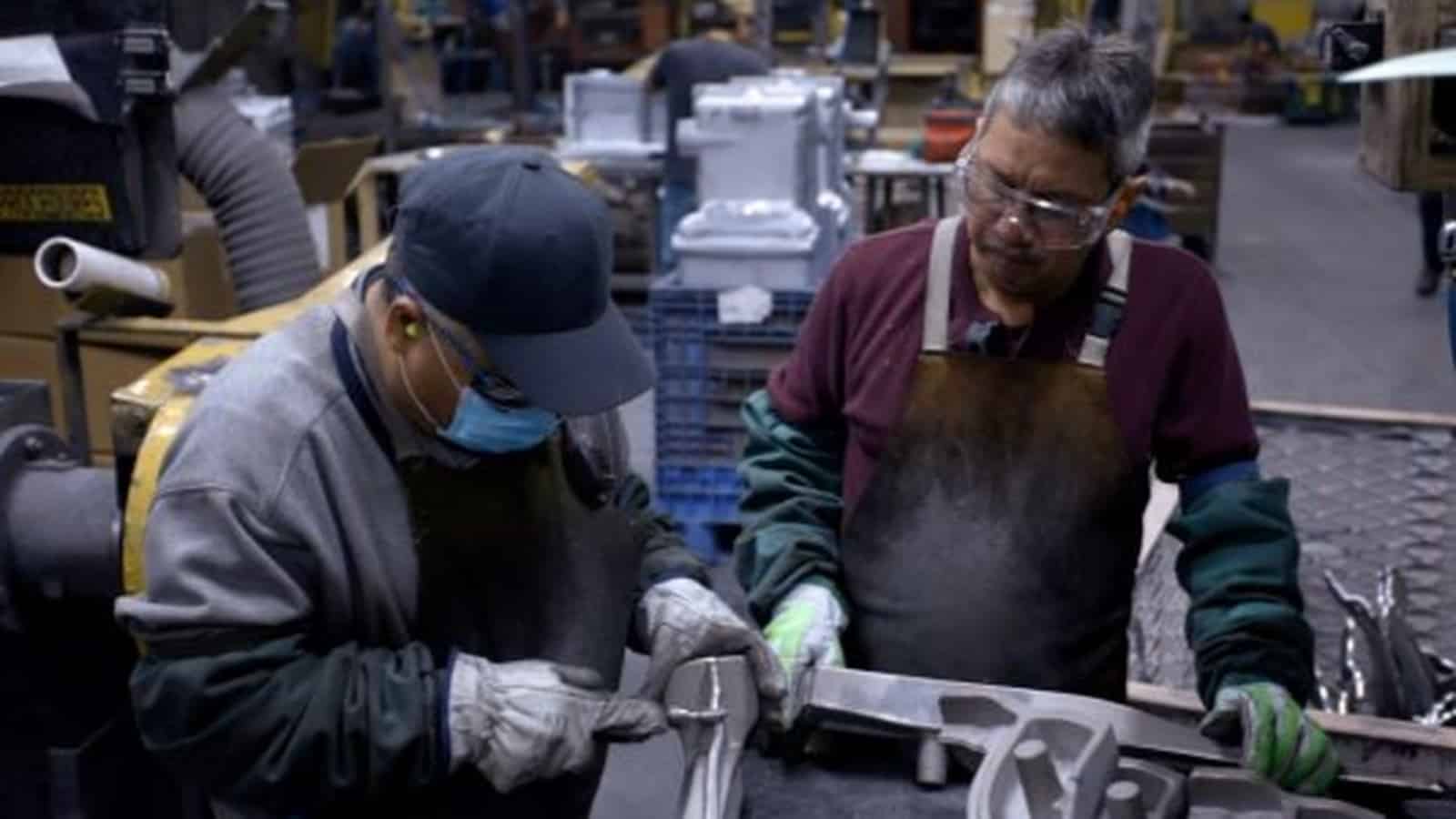
The strength-to-weight ratio of light weight aluminum alloys is especially beneficial in applications where weight financial savings is essential. In aerospace design, lighter parts contribute to improved fuel efficiency and efficiency. The mix of stamina and decreased mass also promotes simpler handling and setting up during producing procedures. As a result, light weight aluminum foundries play a crucial function in producing premium castings that take advantage of these residential or commercial properties, ensuring that markets can satisfy the needs of modern-day design challenges successfully.
Versatility in Applications
Aluminum foundries demonstrate amazing adaptability across various markets, fitting a wide variety of applications. Their capability to customize options assurances that details requirements are met, boosting capability and efficiency. This adaptability makes aluminum casting a favored choice in markets such as auto, aerospace, and durable goods.
Varied Market Applications
Convenience specifies the function of light weight aluminum foundries in different industries, showcasing their capacity to adapt to a wide range of applications. These foundries offer industries such as automotive, aerospace, and durable goods, showing their comprehensive capabilities. In the auto field, light weight aluminum castings add to light-weight designs, improving gas effectiveness and performance. Aerospace applications benefit from the strength-to-weight proportion of light weight aluminum, crucial for aircraft parts. Additionally, consumer items, consisting of electronics and appliances, take advantage of light weight aluminum's sturdiness and visual appeal. The factory's ability to generate detailed forms and complex layouts satisfies the one-of-a-kind demands of each market, guaranteeing top notch options. This adaptability not only improves manufacturing performance yet additionally promotes technology throughout diverse market fields, strengthening light weight aluminum's function as a favored product.
Modification for Particular Demands
Customizing aluminum spreadings to fulfill details client needs exhibits the official source flexibility of foundries in addressing unique sector challenges. Factories can develop personalized designs that satisfy various specs, making certain suitable efficiency for diverse applications. This flexibility permits the manufacturing of parts with unique forms, dimensions, and weights, enhancing their performance in details settings. Advanced casting techniques allow the unification of specialized alloys, which can boost properties such as strength, deterioration resistance, and thermal conductivity. By teaming up closely with customers, light weight aluminum foundries can determine specific demands and provide tailored solutions that align with task goals. This commitment to customization not only fosters innovation however additionally settings aluminum spreadings as a favored option across multiple fields.
Boosted Production Efficiency
Enhanced manufacturing efficiency in light weight aluminum foundries is accomplished through structured manufacturing procedures that optimize operations. By applying these procedures, foundries can substantially minimize preparations, allowing for quicker turnaround on jobs. Furthermore, affordable manufacturing approaches further enhance total performance, contributing to enhanced competition out there.
Streamlined Manufacturing Processes
Enhancing manufacturing processes is vital for attaining improved production efficiency in aluminum foundries. By enhancing operations, aluminum foundries can decrease waste and lower functional prices. Automated systems play a crucial duty, allowing for precise control over casting criteria and guaranteeing regular high quality. Additionally, the assimilation of advanced technologies, such as computer-aided this style (CAD) and simulation software application, promotes much better planning and source allotment. This not just accelerates the design-to-production cycle yet additionally enhances the capacity to adapt to changing market demands. Furthermore, staff member training and advancement contribute to a much more experienced workforce, efficient in operating innovative machinery. Ultimately, these streamlined procedures cause improved outcome, allowing aluminum foundries to satisfy consumer assumptions while preserving competitive rates.
Lowered Lead Times
Accomplishing decreased lead times is a direct benefit of applying streamlined production processes in aluminum foundries. By enhancing operations and reducing traffic jams, these foundries boost manufacturing effectiveness, enabling quicker turn-around on jobs. Automation innovations and exact scheduling better contribute to this performance, making it possible for producers to respond quickly to client demands. The ability to produce top notch spreadings in much shorter timeframes not just satisfies client assumptions but likewise enhances affordable positioning out there. Additionally, reduced lead times assist in much better supply monitoring, as organizations can change their supply chains with better agility. Fundamentally, aluminum foundries that focus on reduced preparations can use remarkable solution while keeping the quality criteria vital for costs metal additional hints casting remedies.
Cost-Effective Production Approaches
Cost-efficient Production Processes
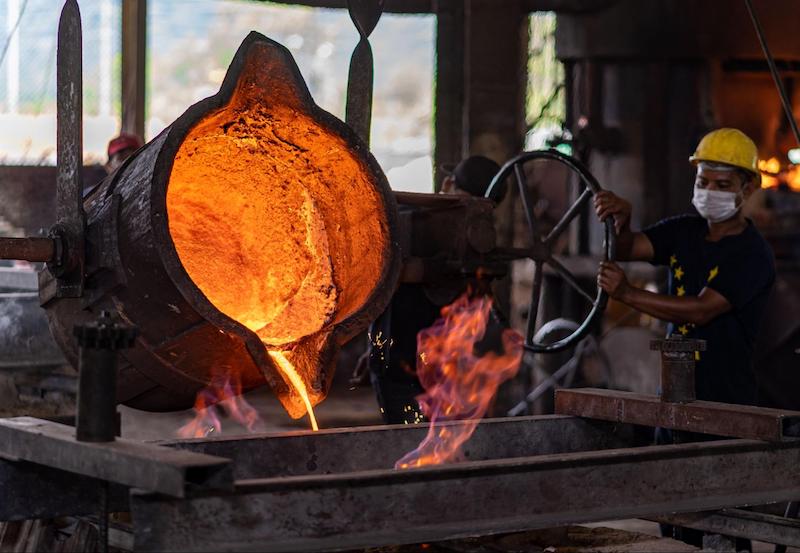
Many aluminum foundries are increasingly adopting economical manufacturing processes to enhance productivity while reducing costs. These procedures commonly incorporate advanced technologies such as automation and accuracy spreading, which simplify procedures and lower labor prices. By utilizing computer-aided layout (CAD) and computer system mathematical control (CNC) equipment, foundries can accomplish higher accuracy and reduce material waste, causing more effective production cycles.
In addition, using lean manufacturing principles permits foundries to optimize their process, remove traffic jams, and boost total efficiency. This emphasis on continual improvement not only decreases manufacturing prices however additionally boosts product high quality.
Calculated sourcing of raw materials can better add to cost savings, ensuring that foundries preserve affordable pricing without endangering on top quality. On the whole, these economical manufacturing procedures setting light weight aluminum foundries to fulfill expanding market demands while preserving earnings and sustainability in the metal casting sector.
Eco-Friendly and Recyclable Material
Aluminum foundries are significantly recognizing the value of green and recyclable materials in their manufacturing procedures. Aluminum itself is one of one of the most recyclable steels, with the capability to be recycled indefinitely without losing its homes. This characteristic substantially lowers the environmental footprint linked with metal spreading, as recycled aluminum needs just a fraction of the energy needed to create brand-new aluminum from bauxite ore.
Using recycled light weight aluminum not just minimizes waste but likewise saves natural deposits and minimizes greenhouse gas discharges. As sectors change towards sustainable methods, light weight aluminum foundries are adopting more eco-conscious techniques, such as making use of energy-efficient innovations and minimizing damaging exhausts throughout manufacturing.
Frequently Asked Concerns
What Types of Aluminum Alloys Are Commonly Utilized in Factory Processes?
Frequently made use of light weight aluminum alloys in shop procedures include A356, A380, and A413 (Aluminum Foundry). These alloys are preferred for their exceptional castability, mechanical residential or commercial properties, and rust resistance, making them suitable for various commercial applications and components
Exactly How Does Aluminum Casting Contrast to Other Steel Casting Methods?
Aluminum casting offers benefits such as lighter weight, exceptional deterioration resistance, and great thermal conductivity contrasted to various other steel casting techniques. Additionally, it gives premium surface coating and precision, making it a recommended option for numerous applications.
What Industries Advantage Many From Aluminum Shop Services?
Different sectors, consisting of automobile, aerospace, electronics, and construction, significantly take advantage of light weight aluminum foundry solutions. These sectors utilize light weight aluminum's lightweight, corrosion-resistant properties and flexibility, guaranteeing high-performance components and economical manufacturing remedies for varied applications.
How Does the Recycling Refine for Aluminum Work?
The reusing process for light weight aluminum involves accumulating scrap, shredding it, thawing it down, and eliminating pollutants. This recycled aluminum can after that be cast right into new products, considerably lowering energy consumption and environmental impact compared to primary production.
What Are the Typical Lead Times for Aluminum Casting Projects?
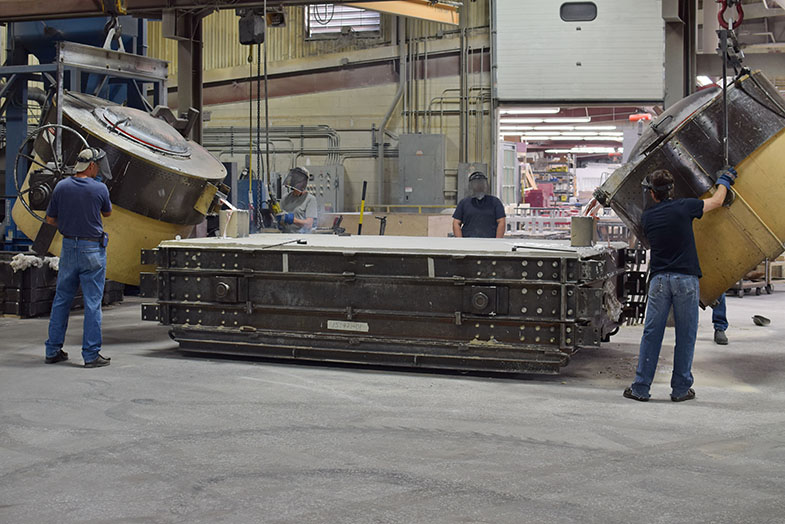
Lead times for aluminum casting jobs typically vary from a couple of weeks to a number of months, depending upon variables such as project complexity, mold and mildew preparation, and production volume, which jointly affect the total timeline for conclusion.