How Aluminum Casting compares with alternatives in weight
Everything You Required to Know Concerning the Uses and Conveniences of Aluminum Castings
Aluminum castings play a crucial duty throughout different industries, offering unique properties that boost product performance. Their lightweight nature and strength make them ideal for applications in auto and aerospace markets. Additionally, the versatility of casting techniques permits elaborate layouts and tight tolerances. As the demand for sustainable services climbs, recognizing the advantages and applications of aluminum castings comes to be progressively crucial. What specific advantages do they offer over other materials?
Summary of Aluminum Casting Processes
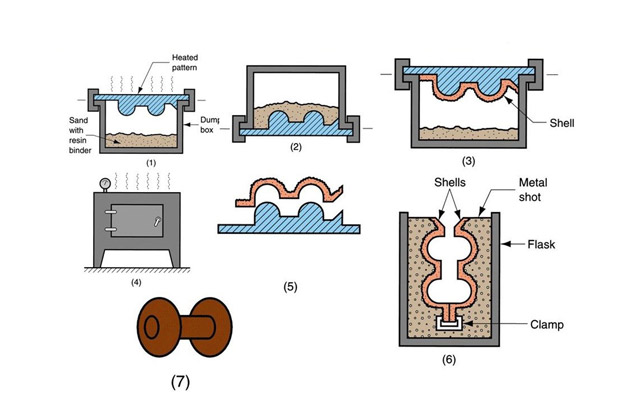
Aluminum casting procedures include a range of techniques utilized to form liquified aluminum into wanted kinds. These methods include sand casting, pass away spreading, and financial investment casting, each offering distinctive benefits relying on the application (Aluminum Casting). Sand spreading entails producing a mold from sand, permitting complex designs and huge parts, while die spreading uses high pressure to inject liquified aluminum right into steel mold and mildews, making certain accuracy and smooth coatings. Investment casting, also called lost-wax casting, creates intricate forms with exceptional dimensional accuracy, making it suitable for detailed parts
These procedures are characterized by their capability to generate light-weight, durable parts that exhibit outstanding corrosion resistance. The convenience of aluminum allows for modification in different markets, from vehicle to aerospace. Additionally, the ability to recycle aluminum improves the sustainability of these casting procedures, minimizing ecological impact while preserving material honesty. Recognizing these techniques is essential for maximizing production effectiveness and accomplishing high-grade aluminum castings.
Trick Applications of Aluminum Castings
Aluminum castings play a vital function across various markets, specifically in vehicle, aerospace, and customer electronic devices. In the automotive market, they add to light-weight frameworks that improve gas effectiveness. In a similar way, aerospace parts gain from aluminum's strength-to-weight ratio, while consumer electronic devices utilize its flexibility for efficient manufacturing.
Automotive Sector Applications
As the auto industry continues to evolve, suppliers significantly rely upon aluminum castings for their light-weight yet sturdy buildings. These castings play an important function in boosting automobile efficiency, gas efficiency, and overall safety. Secret applications include engine blocks, transmission housings, and architectural components, which profit from aluminum's excellent strength-to-weight proportion. In addition, aluminum castings promote complex geometries, enabling ingenious layouts that improve the rules of aerodynamics and minimize drag. The corrosion resistance of aluminum also contributes to long life, reducing upkeep prices for both makers and consumers. As electric automobiles gain appeal, aluminum castings are necessary for battery enclosures and other parts, better strengthening their significance in the future of automotive manufacturing.
Aerospace Element Production
In the aerospace sector, aluminum castings are integral to the production of light-weight, high-performance parts. These castings are important for making components such as engine real estates, architectural frameworks, and touchdown equipment elements, where weight decrease is vital for fuel effectiveness and general performance. The excellent strength-to-weight ratio of aluminum enables the advancement of complex geometries that enhance the rules of aerodynamics. In addition, aluminum's resistance to deterioration adds to the longevity and integrity of aerospace parts, guaranteeing safety in trip procedures. The spreading procedure also enables precise resistances, which is essential in meeting stringent aerospace market standards. In general, aluminum castings play an essential function in progressing aerospace technology while sustaining the sector's promote sustainable methods.
Customer Electronic Devices Manufacturing
Making use of aluminum castings in customer electronics manufacturing has ended up being progressively considerable as a result of their lightweight and durable residential properties. Producers leverage these castings to produce parts for different tools, including smartphones, laptops, and gaming consoles. Aluminum's excellent thermal conductivity likewise assists in warmth dissipation, enhancing tool efficiency and durability. The adaptability of aluminum allows for intricate styles and complicated geometries, allowing sleek and modern looks that appeal to customers. Additionally, aluminum castings can be quickly recycled, aligning with the growing need for lasting production practices. As modern technology developments, the role of aluminum castings in developing innovative and reliable customer electronics is expected to expand, making them a staple in the industry.

Benefits of Utilizing Aluminum Castings
While different materials are available for spreading, aluminum stands out as a result of its one-of-a-kind combination of lightweight residential or commercial properties, toughness, and rust resistance. The low density of aluminum makes it a perfect choice for applications where weight reduction is essential, such as in the vehicle and aerospace sectors. Its outstanding strength-to-weight ratio allows suppliers to produce resilient parts without adding extreme weight.
In addition, aluminum castings can be created with detailed designs and tight resistances, making it possible for complex geometries that are difficult to achieve with other materials. The adaptability of aluminum permits for you could try these out different casting approaches, including sand, die, and financial investment spreading, providing to diverse manufacturing requirements. Aluminum's convenience of machining and finishing boosts its allure, facilitating the production of premium surface coatings. In general, the benefits of using aluminum castings add to improved performance and effectiveness in numerous applications across various industries.
Deterioration Resistance in Aluminum Castings
Natural Oxide Layer
An all-natural oxide layer types on the surface resource of aluminum castings, offering an important barrier versus environmental variables that can bring about wear and tear. This thin, safety film is a result of the aluminum's response with oxygen airborne, efficiently protecting the underlying steel from moisture, chemicals, and pollutants. Consequently, aluminum castings display excellent rust resistance, which boosts their longevity and longevity in numerous applications. The oxide layer is not only beneficial for protection however likewise adds to aesthetic top qualities, as it can create a matte surface that many sectors find attractive. In addition, this natural process reduces the need for extra layers, making aluminum castings an economical choice for producers looking for dependable, long-lasting products.
Alloy Variants Influence
The structure of aluminum alloys significantly influences their rust resistance residential properties in castings. Different alloy variants, such as 1xxx, 2xxx, and 6xxx series, exhibit distinct degrees of susceptibility to deterioration. 1xxx alloys, mostly made up of pure aluminum, deal superb corrosion resistance due to their high purity. On the pop over to this site other hand, 2xxx alloys, which contain copper, might experience considerable rust when subjected to harsh atmospheres. 6xxx alloys, incorporating magnesium and silicon, strike a balance in between strength and resistance. The existence of alloying elements can boost or reduce protective oxide layers, eventually impacting long life and performance. Comprehending these variations is vital for selecting the best alloy for certain applications where rust resistance is essential.
Design Flexibility and Customization
Various products exist for casting applications, aluminum stands out due to its amazing style versatility and possibility for personalization. This adaptability enables designers and designers to develop elaborate shapes and kinds that fulfill certain practical needs. Aluminum Casting. The reduced density of aluminum makes it possible for light-weight layouts, which is specifically advantageous in industries such as automobile and aerospace, where weight decrease is crucial
Aluminum castings can be customized to different specs, including wall density, surface finish, and dimensional resistances. This adaptability not only boosts the visual charm however also enhances the performance of the final product. Additionally, progressed methods such as 3D printing and computer-aided design (CAD) further assist in the customization process, allowing rapid prototyping and decreasing preparations. Aluminum castings can properly meet the diverse needs of various industries while providing producers the capability to introduce and respond swiftly to market needs.
Comparison With Other Casting Products
While different casting materials each have their distinct advantages, aluminum consistently demonstrates premium residential properties that make it a favored choice in several applications. Contrasted to iron and steel, aluminum is considerably lighter, which minimizes the overall weight of finished items, improving gas efficiency in vehicle and aerospace industries. Aluminum uses excellent rust resistance, needing much less upkeep over time compared to materials like iron, which can corrosion.
When compared with plastics, aluminum's strength and resilience surpass lots of synthetic choices, making it appropriate for demanding environments. On top of that, aluminum's thermal and electric conductivity is remarkably greater than the majority of other metals, making it excellent for applications requiring reliable heat dissipation or electric elements.
Future Patterns in Aluminum Casting Innovation
Improvements in aluminum spreading technology are set to redefine its applications throughout different sectors. Innovations in automation and robotics are enhancing production procedures, enhancing performance and accuracy. The assimilation of expert system and machine understanding enables real-time monitoring and predictive upkeep, decreasing downtime and enhancing high quality control.
The advancement of innovative alloys is expanding the performance abilities of aluminum castings, making them ideal for even more demanding applications, especially in automobile and aerospace sectors. Lasting methods are additionally getting traction, with raised emphasis on recycling aluminum and lowering carbon impacts during production.
Additive production methods, such as 3D printing, are being checked out to develop complicated geometries that standard techniques can not achieve, allowing for better style flexibility. These fads show a future where aluminum spreading will certainly not only fulfill yet go beyond industry expectations, driving technology and sustainability in manufacturing.
Regularly Asked Concerns
Just How Are Aluminum Castings Recycled After Usage?
Aluminum castings are commonly gathered, cleaned, and processed in recycling facilities. The product is melted down, refined, and then reformed into new products, therefore saving sources and decreasing environmental effect while keeping aluminum's desirable properties.
What Are the Normal Costs Connected With Aluminum Castings?
The normal costs connected with aluminum castings differ based upon variables such as complexity, quantity, and product specs. Generally, prices range from a few dollars per pound to significantly higher amounts for detailed styles and large amounts.
Exactly How Do Aluminum Castings Contrast in Weight to Steel Castings?
Aluminum castings consider considerably less than steel castings, commonly around one-third the weight (Aluminum Casting). This decreased mass allows for less complicated handling, transport, and application in numerous sectors, adding to enhanced efficiency in style and production procedures
What Industries Primarily Count on Aluminum Castings?
Different industries substantially rely upon aluminum castings, consisting of automotive, aerospace, electronic devices, and durable goods. Their lightweight nature, rust resistance, and flexibility make them essential for manufacturing components in these industries, improving performance and efficiency.
Are There Any Kind Of Wellness Threats Related To Aluminum Casting Processes?
Health and wellness risks related to aluminum casting processes include direct exposure to fumes, dirt, and chemicals, which can result in breathing concerns and skin irritation. Proper safety and security measures and devices are vital to reduce these potential hazards in the work environment.